
Global Platform for Disaster Risk Reduction | Geneva, Switzerland | 2–6 June 2025
When the world’s governments, UN agencies, and civil society groups gather to talk about disaster risk, persons with disabilities are too often missing from the table. SAFOD is going to Geneva to change that.
From 2 to 6 June 2025, the eighth session of the Global Platform for Disaster Risk Reduction (GP2025) takes place in Geneva, Switzerland. Organised by the UN Office for Disaster Risk Reduction, it is the premier global forum for reviewing progress on the Sendai Framework — the international blueprint for reducing disaster risk between 2015 and 2030.
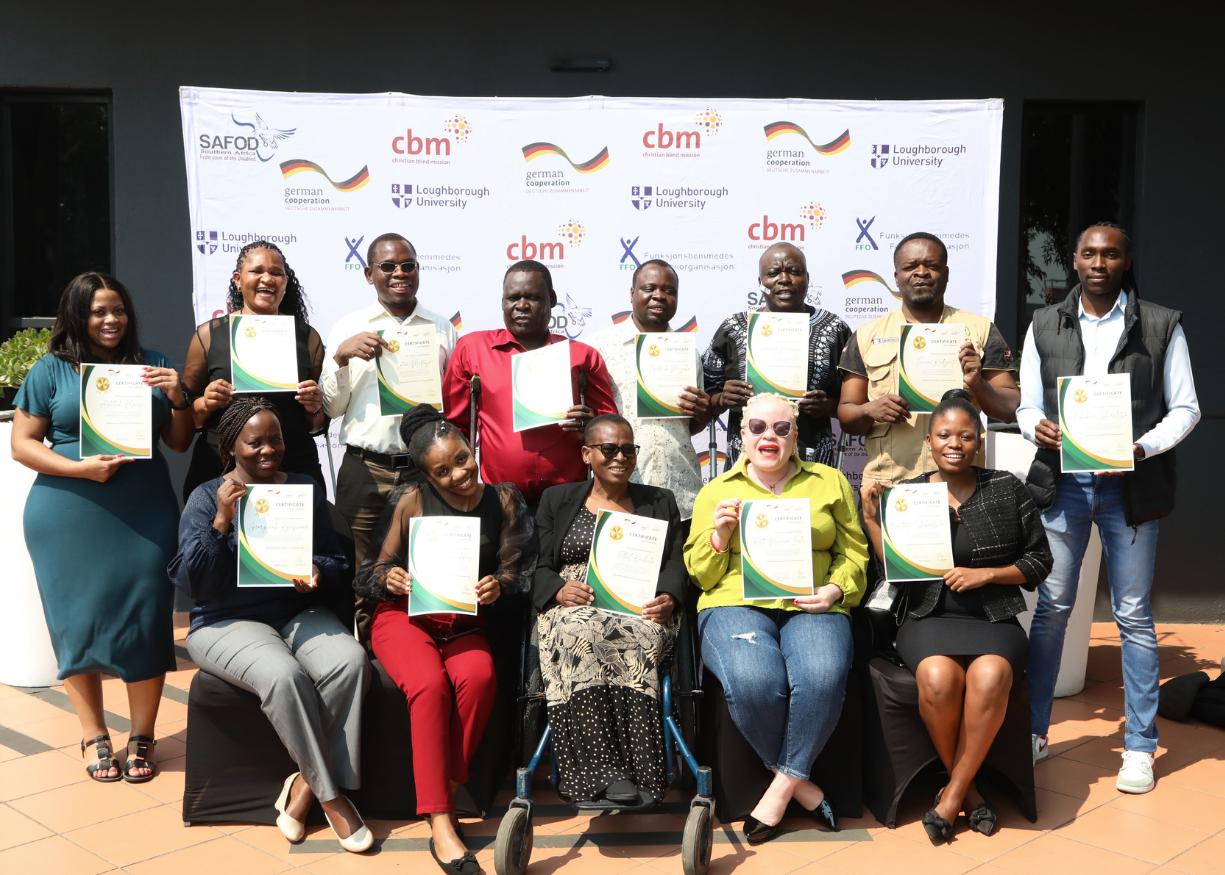
SAFOD will attend alongside two of its affiliates: the Zambia Federation of Disability Organisations (ZAFOD) and the Federation of Organisations of Disabled People in Zimbabwe (FODPZ).
Why this platform matters
GP2025 is where direction is set. Governments report. Strategies are agreed. Partnerships are formed. What gets said — and who says it — shapes how countries plan for disasters for years to come.
The theme this year is Every Day Counts: Act for Resilience Today. For persons with disabilities, that phrase carries real weight. Resilience is not built in an emergency. It is built in the policies written before disaster strikes, the warning systems designed to reach everyone, and the evacuation plans that do not leave people behind.
Disasters do not discriminate. But systems often do.
What SAFOD and its partners will push for
The team will not simply attend sessions. They will actively advocate for concrete change. Their priorities are clear:
- Disability perspectives must shape DRR policies and frameworks at every level.
- Early warning systems must be designed to be accessible and inclusive from the start.
- Humanitarian infrastructure must follow universal design principles.
- Data on disability must be collected and used so that no group remains invisible.
- Lived experience must be heard in global discussions, not just in side events.
From Southern Africa to the global stage
The DiDRR project in Malawi, Zimbabwe, and Zambia has produced real evidence. Communities where persons with disabilities sit on disaster risk committees. Demonstration plots that build food security and resilience at household level. Advocacy plans developed by OPDs who know their communities and their governments.
That evidence belongs at GP2025. It shows what disability-inclusive DRR looks like in practice — not as a concept, but as something already happening in rural wards in Gwembe and the fields of Muzarabani.
The message SAFOD carries to Geneva is simple. Inclusion is not a favour. It is a right. And building resilience for everyone is the only kind of resilience that works.
To follow SAFOD’s participation at GP2025, visit safod.net.