
Joint Field Visit | Gwembe District, Zambia | 27–29 November 2024
Conferences set the agenda. Field visits test it.
After months of training, partner meetings, and regional platforms, SAFOD and its partners went to Gwembe District in Zambia to see what the DiDRR project looks like in practice — in the wards, the gardens, and the self-help groups where real change either happens or it does not.
Who made the visit?
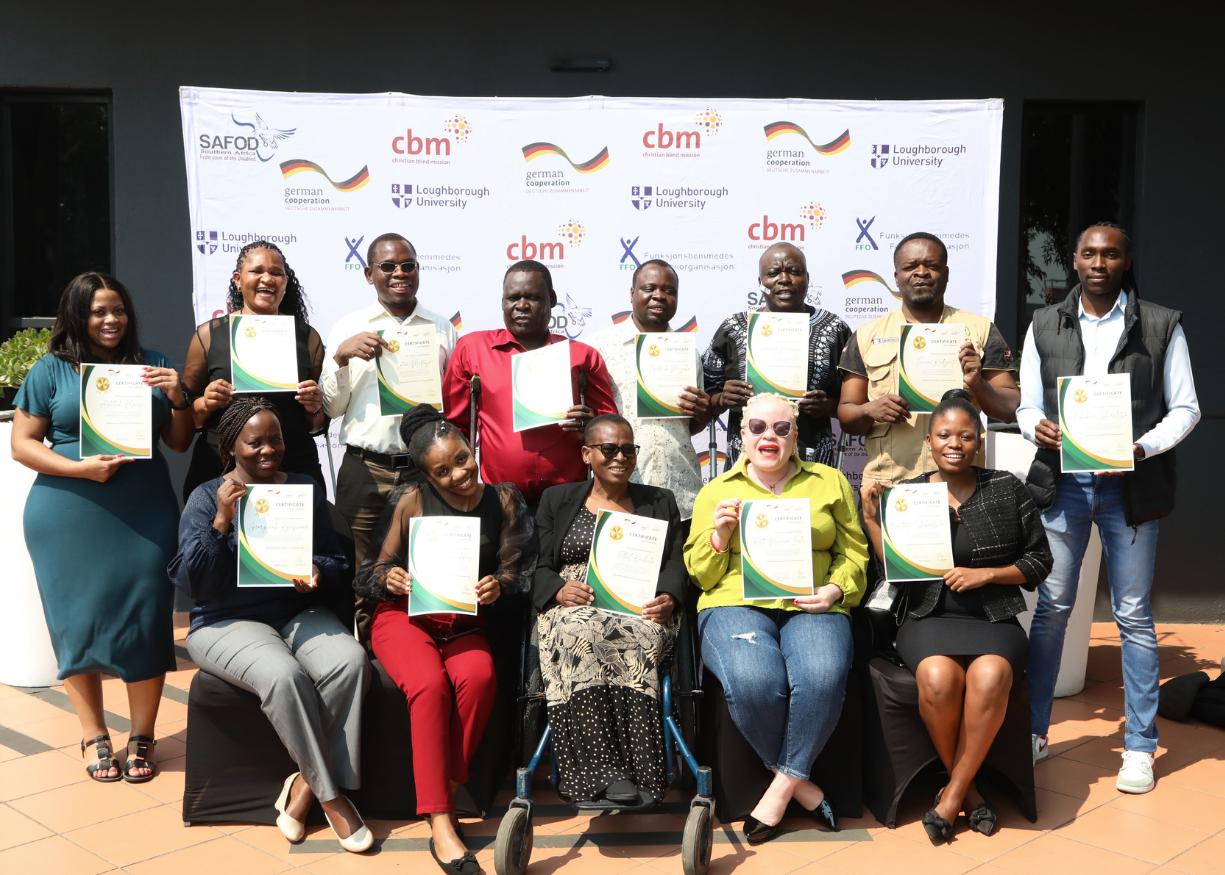
The three-day joint visit brought together SAFOD, FODPZ, ZAFOD, REPSSI, ADRA, and CBM. Government was also in the room — representatives from the Disaster Management and Mitigation Unit (DMMU), the Department of Social Welfare, and local ward leaders joined the team throughout the visit.
That mix matters. Seeing the same reality together — partners, funders, and officials side by side — builds shared understanding that no report can replicate.
Day one: meeting the district authorities
The team began with a courtesy visit to the District Commissioner and the DMMU coordinator in Gwembe Plateau. This is standard practice — and important. Local government buy-in shapes whether community-level work survives beyond a project cycle.
Days two and three: into the communities
The team visited demonstration plots, self-help groups, and satellite committee members across three areas: Plateau, Sinafala Ward (Mandonda Zone), and Bbondo Ward.
What they found was encouraging. Disaster risk committees in all three wards include persons with disabilities as members. The demonstration plots — small-scale farming initiatives designed to build food security and resilience — are working. Persons with disabilities are not just beneficiaries. They are practising backyard gardening in their own homes, applying what they have learned.
That is a shift in agency. It is exactly what the DiDRR project is designed to produce.
What this visit showed
It is one thing to write disability inclusion into a project plan. It is another to find it happening in a rural ward in Gwembe. These communities are not waiting for a policy to change before they act. They are building resilience now, with the tools and knowledge the project has helped provide.
The visit also gave partners a shared reference point. When they return to their offices and their meetings, they carry with them what they saw — people with disabilities at the centre of community disaster planning, not at the margins.
That is the measure of progress that matters most.
To learn more about SAFOD’s work on disability-inclusive disaster risk reduction, visit safod.net.